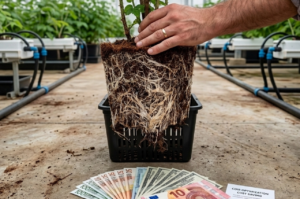

Billions have been poured into agriculture and food businesses in the past years. Reports suggest that global agrifoodtech investment reached around 16 billion dollars in 2024, with private equity commitments to agriculture projected to pass 20 billion in 2025. For many funds, it looks like the perfect equation: global demand keeps rising, ESG reports love a green label, and spreadsheets show smooth lines of growth. What could possibly go wrong?
Quite a lot, actually.
Let’s start with labor. In berries, labor is not just a cost line in Excel, it is the difference between fruit on supermarket shelves and fruit rotting in the field. Many funds assume labor costs grow at around 2% a year, just like general inflation. The problem is that reality never read their business plan. In the United States, real farm wages, already adjusted for inflation, rose by about 28 percent between 2000 and 2022 (USDA ERS). In the European Union, agricultural income per worker, also adjusted for inflation, has increased by more than 90 percent since 2009, close to five percent a year (Eurostat). These are real gains, not nominal. In other words, farm labor costs have been running faster than the neat two percent that Excel loves to assume. And as any grower will tell you, finding enough workers is often harder than paying them.
Then there are varieties. A decade ago, planting blueberries was often a 10- to 15-year investment. Today, some varieties do not even last long enough to watch a Netflix series without being replaced. New genetics arrive every year with promises of better flavor, yield, and shelf life. Many deliver, but rusticity tends to get lost. Modern varieties are like sports cars: great performance, but only if you drive them perfectly. They need precise irrigation, nutrition, and soil conditions. What works in one corner of the globe may fail miserably in another. Yet funds keep assuming results can be copied and pasted across continents. Spoiler: plants do not care about copy-paste.
And then comes the human factor. Yes, universities are producing more graduates in agriculture. But here is the paradox: more diplomas on paper, fewer agronomists with the actual scars of experience. Running high-intensity crops is not something you learn in a lecture hall. It takes years in the field. Meanwhile, demand for skilled agronomists is rising faster than the supply. To make it worse, in many countries agriculture is still not seen as a glamorous career choice (Eurostat). Try convincing a top student that managing irrigation schedules is as exciting as fintech. The result? Not enough experienced professionals to run the scale of farms that funds are trying to build.
It would be unfair to ignore the positives. Investment funds have brought professionalization, larger platforms, and capital for innovation. Bigger businesses can negotiate better prices, adopt new technology, and in some cases pay higher salaries. The sector has gained visibility, and there are real benefits when investors respect the complexity of biology and people behind each hectare.
But agriculture is not just another line in a diversified portfolio. It is not a straight line in Excel. It is a living system, full of surprises, fragile and resilient at the same time. Funds that keep pretending otherwise risk fooling themselves and burning millions. Those who accept the complexity stand a better chance of turning capital into long-term value, not only for investors but for the people who actually grow our food.
References
- AgFunder (2024). Global AgriFoodTech Investment Report 2024
- Farmonaut (2025). Private Equity Agriculture Investment 2025 – Top Trends
- USDA ERS (2022). Real Wages of Hired Farm Workers, 2000–2022
- USDA ERS (2023). Farm Labor Wages, 2019–2023
- Eurostat (2024). Performance of the Agricultural Sector: Agricultural Income per Annual Work Unit
- Eurostat (2020). Farmers and the Agricultural Labour Force – Statistics
- Farmdoc Daily (2023). Preparing the Future Food and Agricultural Workforce